

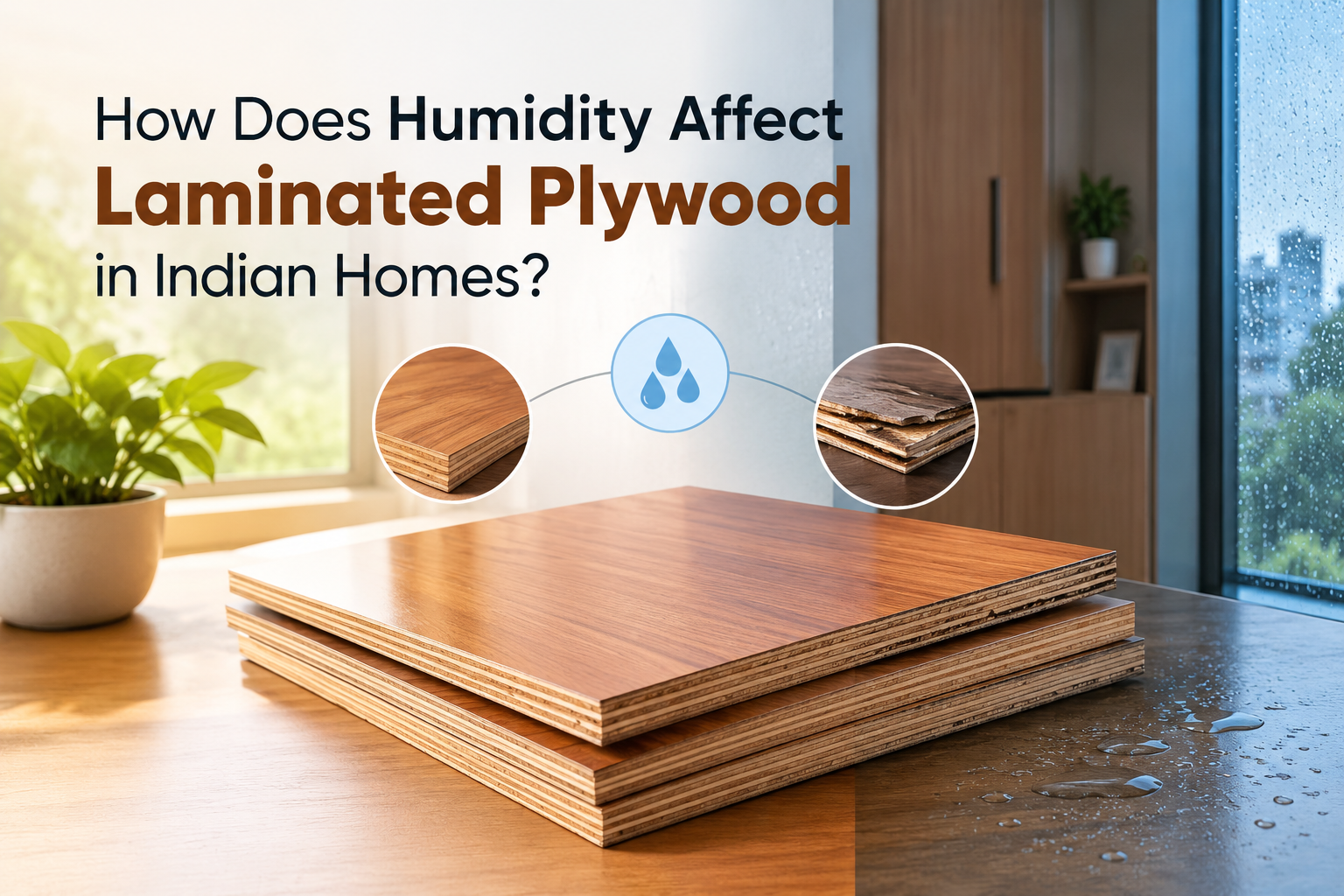
The climate in India varies with respect to the amount of humidity, especially during the monsoon season, which may have an impact on the sustainability and aesthetics of the furniture and interior surfaces. Though the use of laminated plywood by Ply News provides an excellent option for use in residential interiors, its success largely depends upon several factors.
How Humidity Affects Laminated Plywood?
1. Moisture Absorption and Swelling:
The plywood consists of wooden veneers, which absorb moisture from the air surrounding the material. If kept in a humid environment for too long, it will lead to swelling. The best quality laminates act as a protective layer for the product; however, they do not make plywood water-resistant.
2. Laminate Peeling and Bubbling:
Moisture can affect the bond between the decorative laminate and plywood substrate if unsuitable adhesives are used during the bonding process. It may lead to peeling and bubbling of the laminate.
3. Distortion and Dimensional Changes:
The alternating changes in humidity can result in expansion and contraction in the case of plywood. The presence of uneven distribution of moisture in the plywood or improper installation can lead to distortion and deformation in the plywood. These can have an impact on the positioning of cabinet doors, wardrobes, shelves, and other furniture pieces that fit inside.
4. Fungi Formation and Lowered Durability:
Dampness can lead to the formation of fungi, especially if there is a lack of proper ventilation and moisture gets into the plywood via gaps and edges. Moisture-resistant plywood can perform well in difficult conditions; however, it cannot compensate for constant leaking of water.
How to Protect Laminated Plywood in Indian Homes?
Some ways that homeowners can increase the lifespan of laminated plywood are:
- Choosing the proper plywood grade: It is advisable that the house owner chooses plywood according to its application and resistance to moisture. Moisture-resistant and boiling water resistant grades of plywood can be used for certain applications according to standards in place.
- Edge sealing: The edges and openings of the plywood should be adequately sealed so as to reduce moisture exposure.
- Ventilation: Proper ventilation must be provided in the kitchen, bathroom, and other enclosed spaces so as to prevent excess moisture.
- Leakage repair: Any leaks from the pipes must be fixed to avoid exposure to moisture.
- Proper installation: Adequate bonding, adhesion, and support of the panels will reduce delamination and warping.
Conclusion
Moisture alone cannot damage laminated plywood; however, excessive moisture in excess and faulty installation can reduce the lifespan of laminated plywood. Selection of the right material, sealing edges, and moisture control in the room will increase the durability and beauty of the furniture. These details provided in Ply News assist us in preserving the laminated plywood and help us choose the laminated plywood for our Indian interiors.