

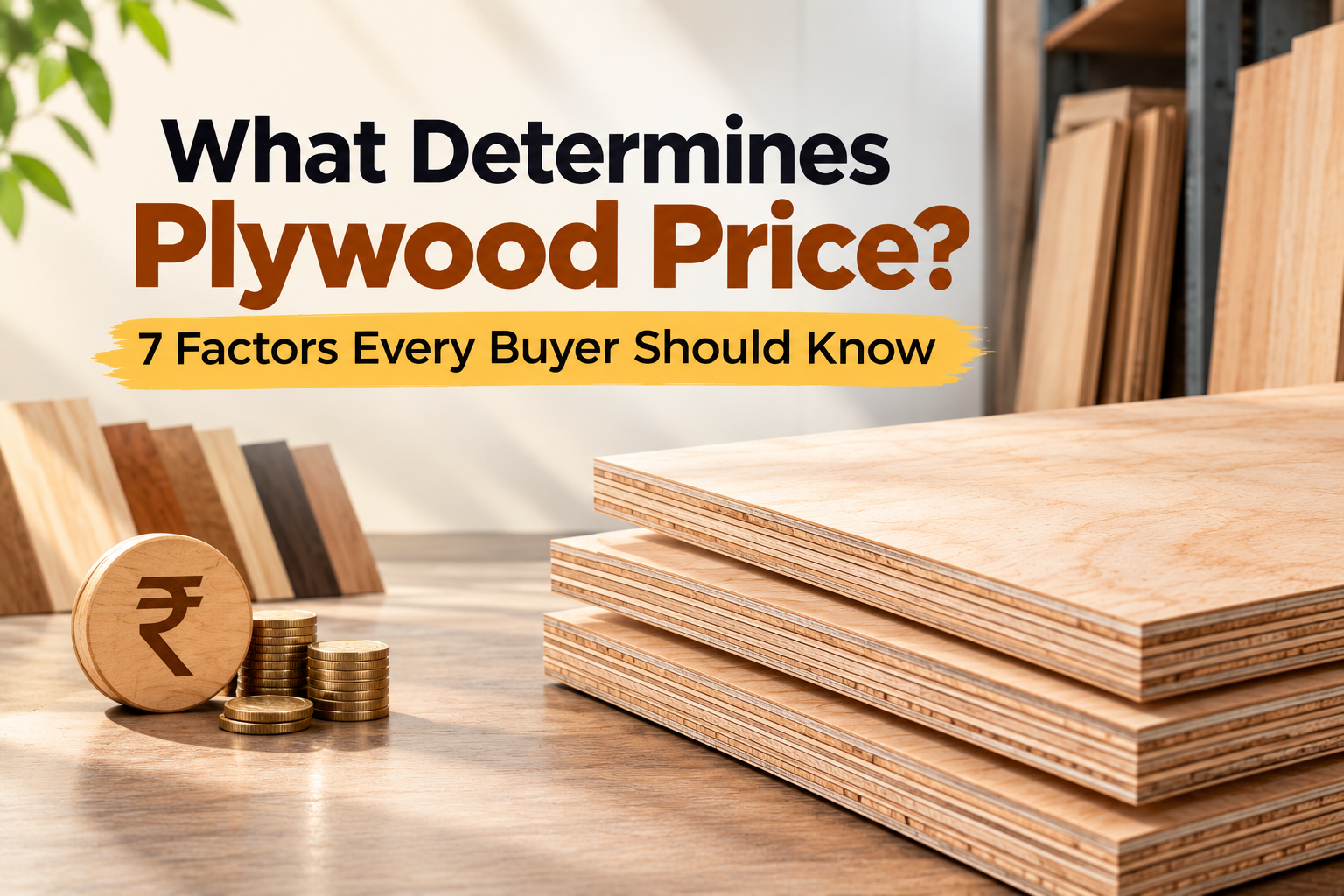
Plywood consumers have a tendency to concentrate on getting the lowest price in their purchases. Plywood price may vary greatly depending on the quality of plywood, its materials, its production process, and the purpose for which it will be used. Cheaper plywood may look more economical in the beginning.
Whether you are purchasing plywood for furniture, interiors, construction, or commercial projects, we at Ply News helps you understand the factors behind its pricing can help you make a smarter buying decision.
7 Factors Every Buyer Should Know Before Buying Plywood
1. Type and Grade of Plywood
The grade of plywood is one of the biggest factors affecting its price. Different grades are designed for different environments and applications.
For example:
- MR Grade – Suitable for general interior applications.
- BWR Grade – Offers better resistance to moisture and humidity.
- BWP Grade – Designed for applications exposed to higher levels of water and moisture.
Generally, plywood with higher water resistance and performance properties comes at a higher cost.
2. Quality of Wood Veneers
The use of high-grade wood veneers affects the price of the plywood. The higher-grade wood veneers give superior strength, durability, and the ability to hold screws.
Higher-grade plywood is made from selected core and face veneers, whereas low-priced plywood contains more gaps.
3. Thickness of the Plywood Sheet
Thicker plywood requires more raw material, which naturally increases its price. Plywood sheets are available in various thicknesses to meet different requirements.
For instance:
- Thin sheets are commonly used for lightweight applications.
- Medium thicknesses would work fine for making furniture and cabinets.
- Thick sheets should be used for more structural purposes.
The right thing to do is buy the sheet based on the need and not just buy the cheapest one.
4. Manufacturing Technology and Quality Control
Advanced manufacturing techniques can also affect the price of the plywood in the end. The use of proper pressing, bonding, calibration, and testing contributes to improved efficiency of the sheet. Producers who implement quality control measures will definitely cost a bit more, but their product will provide more value in the end.
5. Type of Adhesive Used
The adhesive used to bond the veneer layers plays an important role in plywood performance.
High-quality adhesives improve:
- Bonding strength
- Moisture resistance
- Product durability
- Resistance to delamination
Water-resistant and specialised adhesives generally increase production costs, affecting the overall price of plywood.
6. Surface Finish and Appearance
Facial veneers and better surface qualities can make plywood more expensive. When the plywood is going to be seen through furniture or any other interior uses, the buyer might have to pay more for the better finish.
When the plywood is supposed to be fully covered by any other material like laminate, a better surface quality is not always needed.
7. Brand Reputation and Certifications
Branded products tend to have quality control and testing measures in place, and adherence to known quality standards may affect prices as well. Although branded products could end up being more expensive, they do come with more guarantees.
Best Plywood Price – Ply News
The right price for the plywood shouldn’t only depend on the price per piece of plywood. Consumers need to consider other factors such as quality, thickness, grade, type of glue used, durability, and use before making a decision. The value of plywood, as opposed to the price of plywood, is an important factor to consider.