

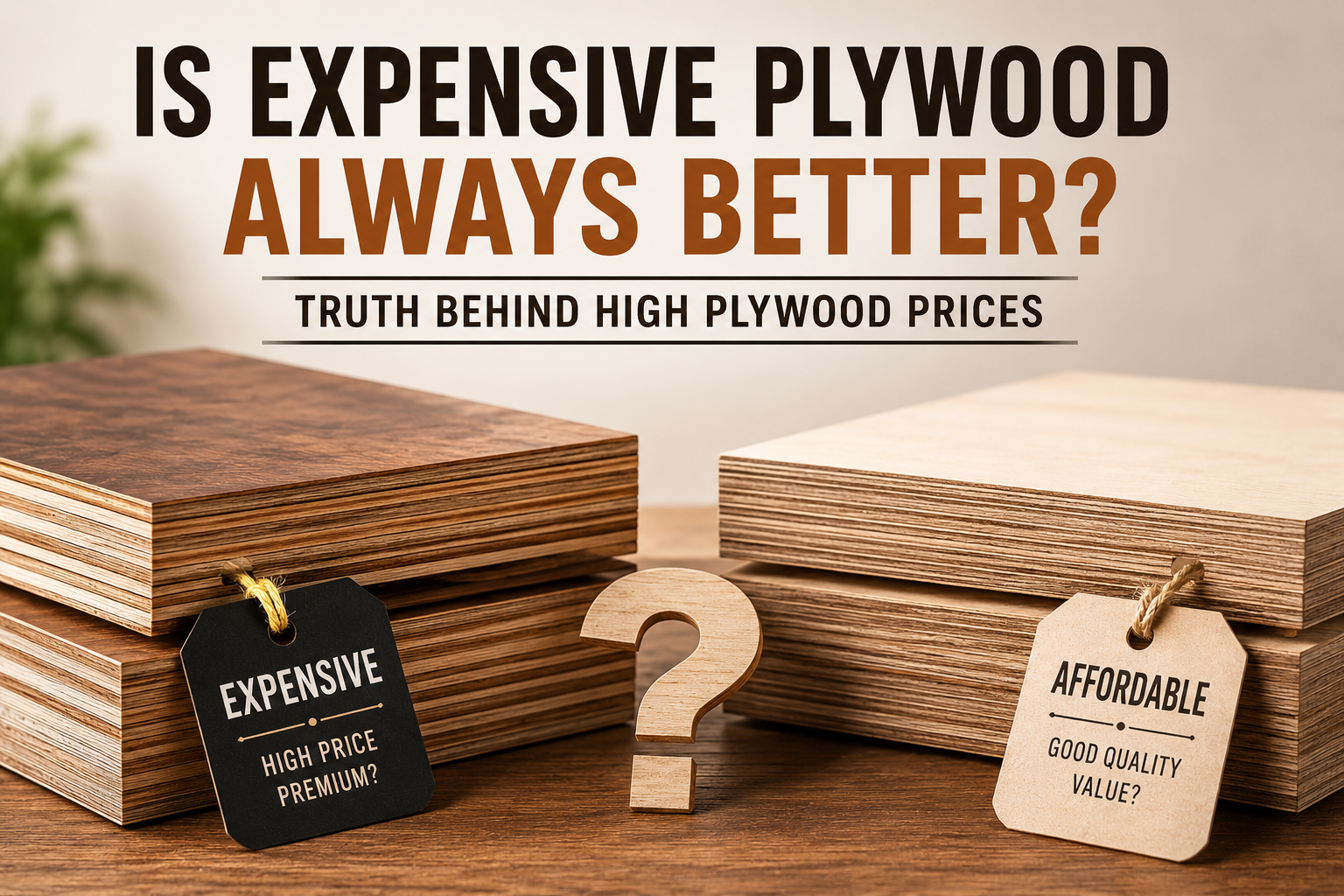
When purchasing plywood, a typical belief among buyers is that a higher plywood price that indicates better quality. If you visit any plywood store you will significantly notice the price difference which is often for sheets that appear almost the same. So does expensive plywood is truly superior or are you paying occasionally just for more branding and marketing. With Ply News you can actually dive into the actual element that influence price of plywood and quality.
Why Plywood Price Vary So Much?
The plywood price is affected by various affected not only its strength or durability. Knowing these elements can help you in making better purchasing choice.
- Type of Wood Used:
Plywood made from hardwood like gurjan or birch generally cost the more than the softwood. Hardwood provides the more strength and finish which raise the price but does not means that soft plywood can perform just as well.
- Core Construction & Layers:
High quality plywood typically features more consistent layers with less gaps inside. This reduces the chance of wrapping & cracking. On the other hand, cheaper plywood might have uneven cores which can impacts its long term performance. However, temporary or low load uses a premium core might not be essential.
- Manufacturing technology:
Ply News uses modern pressing technique, accurate thickness measurement and automated bonding technique which increases production expenses while resulting in higher plywood price. While these aspects enhances consistency but not all projects needs such a high level accuracy.
Does Higher Price Means Better Performance?
Not always, a higher plywood price often include costs beyond raw material.
- Brand Value & Certification:
Famous brands puts a lot of money into marketing, distribution and certification such as ISI or FSC. These elements boost the creditability and provide assurance but they also raise the final cost. On the other hand, lesser known manufacturer might deliver similar quality without the added brand cost.
- Glue & Chemical Treatment:
High-quality plywood uses high-quality glue like BWP and E0/ E1 low emitting glue. This is an essential consideration if you are building a health-focused home, as it is essential for kitchens and bathroom spaces. But if you are using your plywood in a dry environment, it is not necessary to shell out extra money for waterproof glue.
When Expensive Plywood Is Worth It
There are occasions when splurging on plywood is a better idea:
- Modular kitchen, bathrooms—here, moisture resistance is a super important aspect
- Weight-bearing furniture such as bedrooms and wardrobes
- Commercial areas such as needing ruggedness and durability
- Plywood with low emissions for use in a house that has children or people with allergic sensitivities
In such circumstances, picking based on a lower cost could mean that frequently repairs and/or replacing would be required, thereby increasing overall expenditure in the long run.
When You Can Choose Affordable Plywood
On the other side, affordable plywood can be a great option:
- Temporary furniture
- Decorative Panel
- Office partition
- Dry areas wall paneling
In these cases the performance needs are not high and spending extra does not really provide much benefit.
How to Judge Plywood Beyond Price?
Rather than just focusing on the price of plywood, considering the important factors beyond the plywood price are:
- Grade quality (MR, BWR, BWP)
- Thickness consistency
- Core gaps
- Certification & warranty
- Application suitability
A mid-range plywood that fits in your particular requirement can frequently do a better job than a high price plywood cannot perform perfectly.
Conclusion
So, is high plywood price always the best choice? Not necessarily—but it can be, based on what you need it for. A higher price tag on plywood usually indicates better materials, advanced technology and surety but that doesn’t mean that the cheaper plywood is automatically low quality. The best strategy is to choose the type of plywood that fits perfectly in your project needs, rather than just your budget. Knowing what you’re paying for ensures that you get true value—without going overboard on costs. For the most up-to-date information on plywood pricing trends, quality comparisons and expert tips, keep in touch with Ply News, your reliable source for everything plywood.